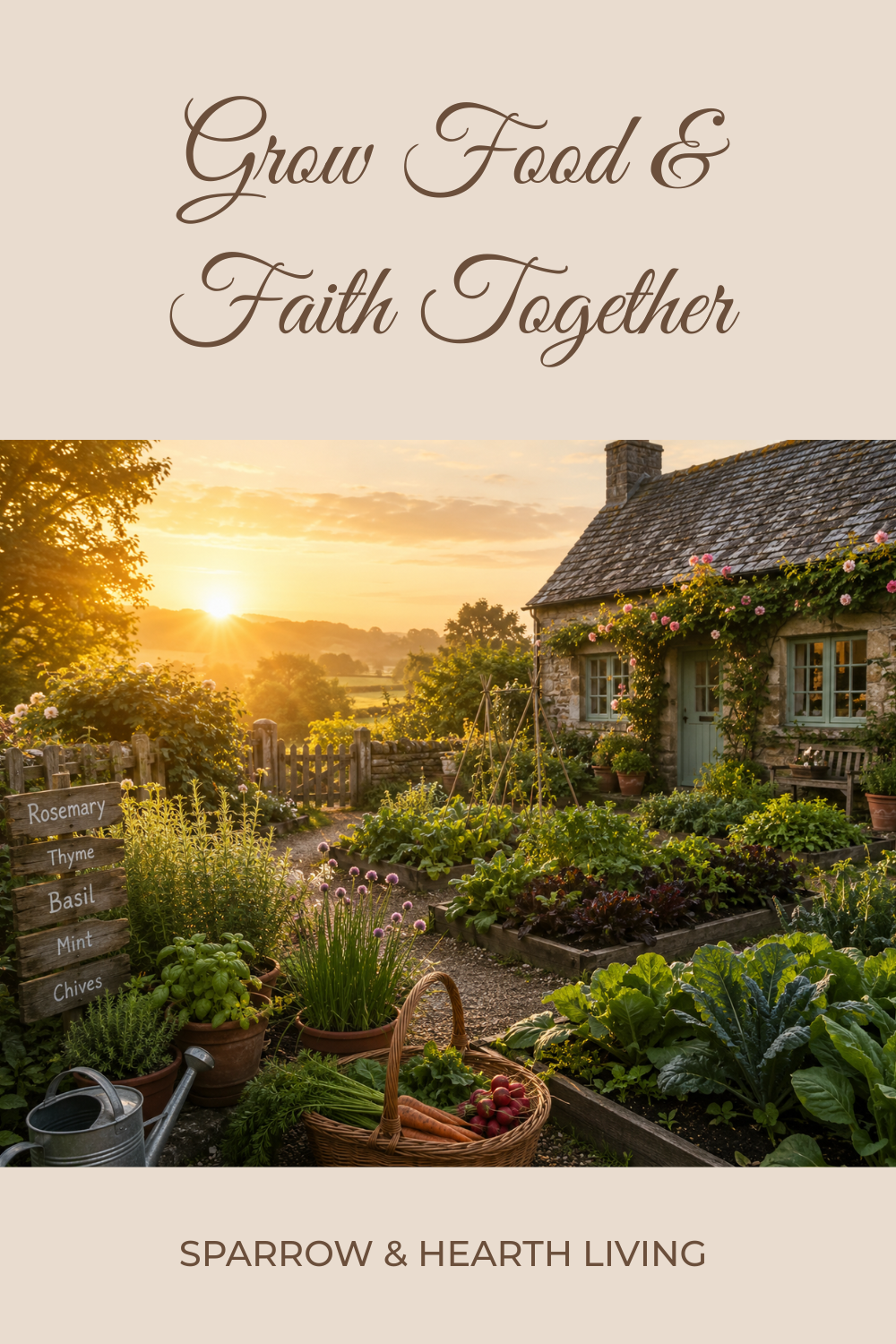
Creating a Slow Living Garden: Growing Food & Faith Together
There is something deeply sacred about a garden.
Not because it is perfect.
Not because every seed sprouts or every tomato ripens beautifully.
But because a garden teaches us to slow down enough to notice God again.
In a world that celebrates hurry, productivity, and constant noise, gardening invites us back into quiet rhythms. It reminds us that growth takes time. That nourishment begins underground. That tending matters.
A slow living garden is more than rows of vegetables or pretty flowers blooming beside the porch. It becomes a place of peace. A place of prayer. A place where faith and homemaking gently intertwine.
It is where we learn to grow food for our tables while also cultivating patience, gratitude, stewardship, and trust in the Lord.
Whether you have sprawling raised beds in the backyard or a few humble pots on a small patio, you can create a garden that nourishes both body and soul.
The Heart Behind a Slow Living Garden
Slow living is not about doing less simply for the sake of simplicity.
It is about living with intention.
A slow living garden invites us to:
- Notice the seasons
- Work with our hands
- Spend time outdoors
- Care for what God has entrusted to us
- Create rhythms instead of rushing
- Feed our families with love and gratitude
Gardening gently pulls us away from screens and back toward creation.
You begin to notice things you once overlooked:
the sound of bees in the lavender,
sunlight across fresh soil,
tiny seedlings pushing through the dirt after rain.
Creation itself begins to feel like worship.
“Those who sow in tears shall reap with shouts of joy.” — Psalm 126:5
The garden becomes a daily reminder that God is always growing something — even when we cannot yet see it.
Start Small & Grow Slowly
One of the most beautiful things about gardening is that it does not need to be extravagant to be meaningful.
You do not need:
- a perfectly designed homestead
- expensive tools
- endless free time
- dozens of raised beds
You only need willingness.
A slow living garden begins with simple faithfulness.
Start with:
- a small herb garden beside the kitchen door
- one raised bed
- a few pots on the porch
- wildflowers near the fence
- tomatoes in grow bags
- lettuce tucked into containers
Allow your garden to evolve naturally over time.
There is no rush.
The beauty of slow living is learning that growth does not have to happen all at once.
Choosing What to Grow
A peaceful garden often includes a mix of practical nourishment and simple beauty.
Herbs for the Home & Hearth
Herbs are one of the easiest and most rewarding ways to begin gardening. They connect beautifully to slow living because they support both cooking and natural homemaking.
Consider planting:
- Basil
- Rosemary
- Mint
- Thyme
- Lavender
- Sage
- Chamomile
Fresh herbs hanging to dry in the kitchen create a home that feels warm, intentional, and rooted.
Lavender can become tea.
Mint can soothe an upset stomach.
Rosemary flavors soup simmering on the stove.
Even the act of clipping herbs before dinner becomes a sacred rhythm.
Vegetables That Feed the Family
Growing food changes the way you view nourishment.
You begin to understand the labor behind every meal.
You waste less.
You appreciate more.
Some beginner-friendly vegetables include:
- Tomatoes
- Green beans
- Lettuce
- Zucchini
- Cucumbers
- Peppers
- Carrots
There is something deeply satisfying about serving a meal that began as a tiny seed in your own garden.
Children especially benefit from helping in the garden. They learn patience, stewardship, responsibility, and wonder.
And somehow vegetables taste better when little hands helped water them.
Plant Flowers Simply Because They Bring Joy
Not everything in the garden must be practical.
Slow living makes room for beauty.
Plant flowers that make your heart feel peaceful:
- Zinnias
- Cosmos
- Sunflowers
- Marigolds
- Hydrangeas
- Coneflowers
- Wildflowers
Fresh flowers on the kitchen table can transform an ordinary weekday into something holy.
God created beauty on purpose.
Your home should have room for it too.
Spiritual Rhythms Tied to Gardening
One of the sweetest parts of gardening is how naturally it draws us toward reflection and prayer.
The garden teaches spiritual lessons everywhere we look.
Sowing Seeds in Faith
When you plant seeds, you trust growth will come even before you see results.
Faith often works the same way.
Sometimes God asks us to remain faithful in unseen seasons — trusting Him beneath the surface.
The garden reminds us:
small beginnings still matter.
Weeding What Crowds the Heart
Every gardener knows weeds grow quickly.
Left untended, they steal nutrients and choke healthy plants.
Our spiritual lives require tending too.
Bitterness.
Distraction.
Comparison.
Busyness.
These things quietly crowd our hearts if we do not pull them up regularly.
Gardening becomes an invitation to ask:
What needs removing so healthy growth can flourish?
Resting with the Seasons
Gardens are not productive all year long.
There are seasons of blooming.
Seasons of harvest.
Seasons of pruning.
And seasons of rest.
Nature does not apologize for resting.
Neither should we.
Slow living reminds us that rest is not laziness — it is part of God’s design.
Creating Gentle Garden Rhythms
A slow living garden does not demand perfection.
Instead, create simple rhythms that feel peaceful and sustainable.
You might:
- water plants early in the morning with worship music playing softly
- pray while pulling weeds
- read scripture on the porch beside your flowers
- collect herbs before dinner each evening
- garden alongside your children after breakfast
- keep a journal of what God is teaching you through the seasons
These small habits become anchors in daily life.
Over time, the garden becomes more than a hobby.
It becomes part of the spiritual atmosphere of your home.
Gardening as Homemaking
Gardening and homemaking belong beautifully together.
The garden extends the warmth of the home outward.
Fresh herbs in homemade bread.
Tomatoes canned for winter soup.
Flowers cut for the table.
Children playing barefoot in the grass while dinner cooks inside.
These are the quiet moments that shape a meaningful life.
Not flashy.
Not rushed.
Not curated for the internet.
Just deeply rooted living.
A Final Encouragement
Your garden does not need to look impressive to be fruitful.
A few pots on a porch can still become holy ground.
The goal is not perfection.
The goal is presence.
To slow down enough to notice God in ordinary things.
To care for creation with gratitude.
To nourish your family with intention.
To build a life rooted deeply instead of lived hurriedly.
And perhaps that is what a slow living garden truly grows best:
not just vegetables or flowers,
but peaceful hearts.
Because sometimes the Lord meets us most gently with dirt beneath our fingernails and sunlight on our faces.
 Sparrow & Hearth Living
Leave a comment